
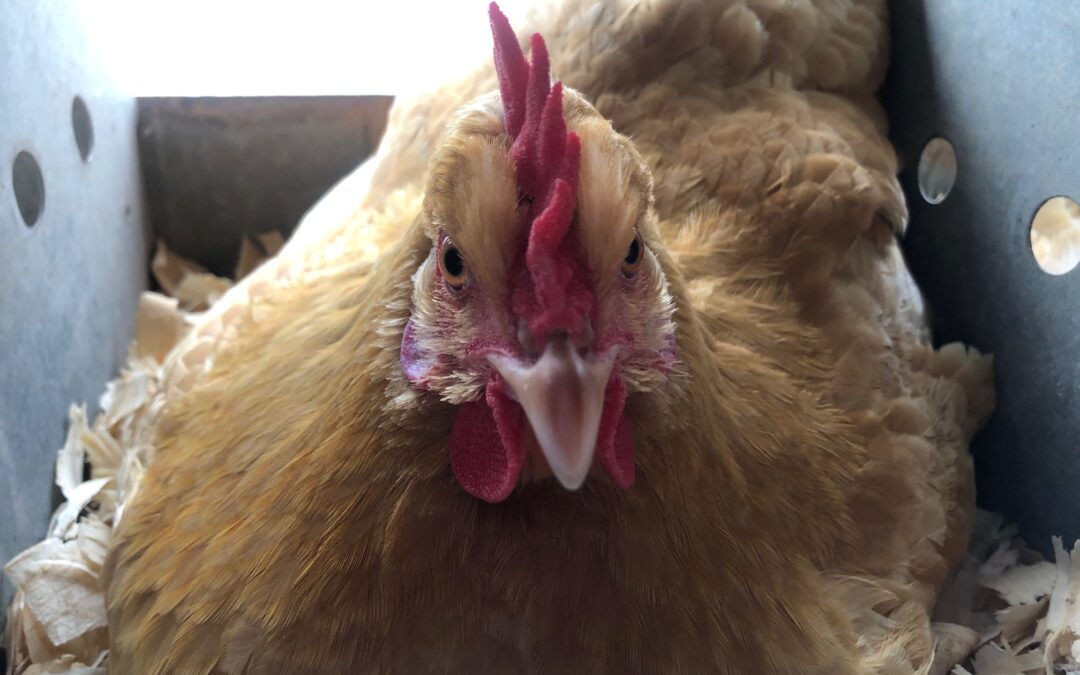
You walk out to the coop and something feels off. One of your hens isn’t running to the feeder like usual. She’s fluffed up in the corner, eyes half closed, not even flinching when the others push past.
If you’ve ever had that sinking feeling—the one that says something’s wrong but I don’t know what—you’re not alone. Chickens are prey animals, and they hide symptoms until they’re too sick to pretend anymore. That means the sooner you notice something unusual, the better chance you have to help.
Let’s go over five common signs your chicken may be sick, and what to do next.
1. Lethargy or Isolation
If a chicken is sitting by herself, tail down, not eating or scratching with the rest of the flock, take note. Lethargy is often the first sign that something is wrong.
What to check:
- Crop: Is it empty in the morning or hard/swollen?
- Vent: Is it clean or messy?
- Eyes and nostrils: Any discharge?
What to do: Isolate her in a clean crate with food and water. Give electrolytes or Nutri-Drench and monitor her poop and behavior. Isolation also prevents bullying and lets you safely observe her symptoms.
2. Fluffed-Up Feathers or Hunched Posture
Chickens puff up to conserve body heat when they are not feeling well. A hen sitting fluffed in a corner, especially with her neck pulled in, is in distress.
What to check:
- Poop – normal or bloody/foamy?
- Behavior: is she eating or drinking?
- Is she egg-bound?
What to do: Keep her warm and dry. Epsom salt soaks or a gentle belly massage can help with reproductive issues. If she’s egg-bound, she may also pant or strain. You’ll find a full step-by-step egg binding guide in the Chicken First Aid Handbook.
3. Limping or Trouble Walking
A chicken that suddenly limps, won’t put weight on a foot, or falls over could have a number of issues—from bumblefoot to a vitamin deficiency.
What to check:
- Bottom of foot: is there a scab or swelling? (Bumblefoot)
- Are her toes curling inward? (Vitamin deficiency or Marek’s)
- Is the leg hot, cold, or twisted?
What to do: If bumblefoot, apply a draw salve, cover with gauze and wrap in self-adhesive wrap. Reapply every week until it’s gone. If her toes are curling and she can’t stand correctly, it could be a vitamin deficiency or the beginning of Marek’s Disease. Separate her from the flock, give her selenium and vitamin b daily and add Poultry Cell Rooster Booster in her water for a vitamin deficiency. There is no cure for Marek’s.
4. Pale or Discolored Comb and Wattles
The color of a chicken’s comb is a window into her health. A bright red comb usually means good circulation and laying health. Pale, blue, or purple combs can mean respiratory distress, anemia, or poor oxygen flow.
What to check:
- Breathing: is she gasping or wheezing?
- Eyes: bubbly or crusty?
- Parasites – internal and/or external
What to do: Separate the chicken so you can keep and eye on her. Offer clean water and food. You can include vitamins and electrolytes. A pale comb may indicate a high parasite load. Deworm her and check closely for mites/lice. Treat her if necessary. If respiratory signs are present, treatment may include Tylan, Denagard, or other poultry-safe antibiotics.
5. Diarrhea or Strange Poop
Not fun to talk about—but poop tells you a lot. Watery, green, yellow, or bloody stool may signal infection, parasites, or stress.
What to check:
- Is it cecal poop (normal) or frequent and runny?
- Any visible worms?
- Other chickens affected?
What to do: Give probiotics and check for parasites. Consider a round of dewormer if needed but know that most medications have an egg withdrawal period. Use gloves when cleaning and disinfect the area well.
Don’t Panic — Be Prepared
Knowing the early signs of illness helps you act fast and possibly save a life. But when emotions are high, it’s easy to freeze.
That’s why I created The Chicken Keeper’s First Aid Handbook.
It’s a practical, printable guide you can keep on hand to:
- Recognize symptoms
- Know what’s normal (and what’s not)
- Treat wounds, illness, crop issues, and more
- Make hard calls like humane euthanasia
You’ll also get a Printable Chicken First Aid Kit Checklist so you can stock up before you need it.
Keep calm, treat early, and trust your gut. You’ve got this.